
How to Reapply Sunscreen Over Makeup Without a White Cast or Mess
Learn what to look for in a reapplication-friendly sunscreen format so midday top-ups don't disturb makeup or leave a chalky finish.
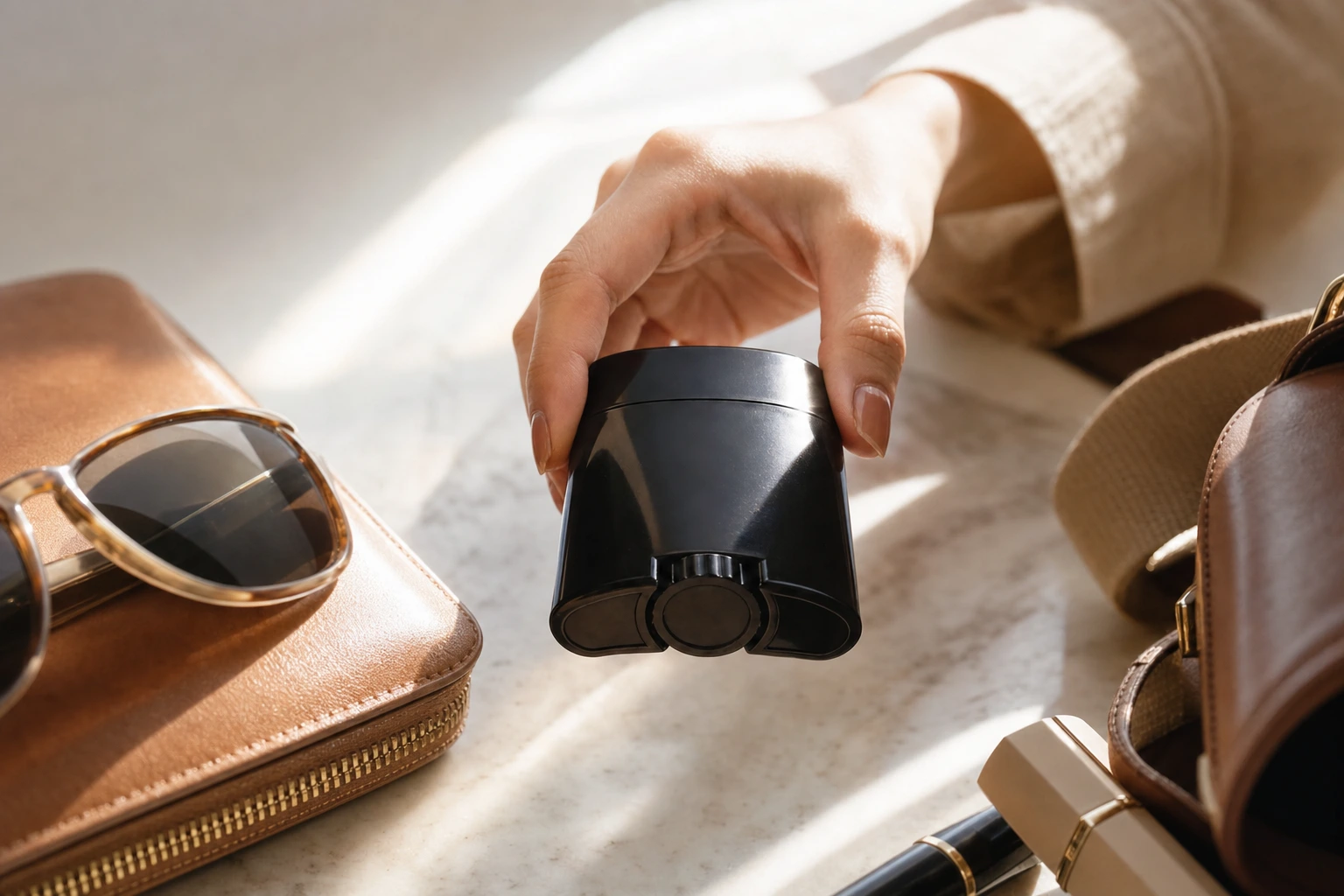
Why liquid and cream sunscreen make reapplying over makeup a mess
Reapplying sunscreen over makeup forces a choice: disturb the makeup you already applied, use too little sunscreen to avoid disturbing it, or spread it unevenly trying to split the difference. Chemist and science communicator Michelle Wong, who writes as Lab Muffin Beauty Science, puts it plainly: there isn't really a way around that compromise once you're working on top of a finished face. A runny or heavy-textured sunscreen fights against the goal of an even layer with minimal disturbance, because it needs to be spread and blended to sit evenly, and blending is exactly what smears foundation or moves concealer.
What to look for instead
The properties that matter for reapplying over makeup are the ones that keep you from having to rub a product in: a lightweight, non-sticky texture, a finish that doesn't sit greasy on top of foundation, and an applicator you can use one-handed without a mirror. Tinted formulas are one documented way to cut white cast, since the tint helps mask the residue some sunscreens leave. That's a fix tied to formulation, separate from format; a reapplication product's own texture can address white residue directly, without depending on tint.
Abib's Quick Sunstick Protection Bar is built around that use case. It's a 22 g stick with a lightweight, non-sticky texture designed for hands-free application, and a non-greasy finish meant to leave no white residue whether you're using it over or under makeup. It carries SPF 50+ broad-spectrum protection, and Abib recommends reapplying it every 2 hours.
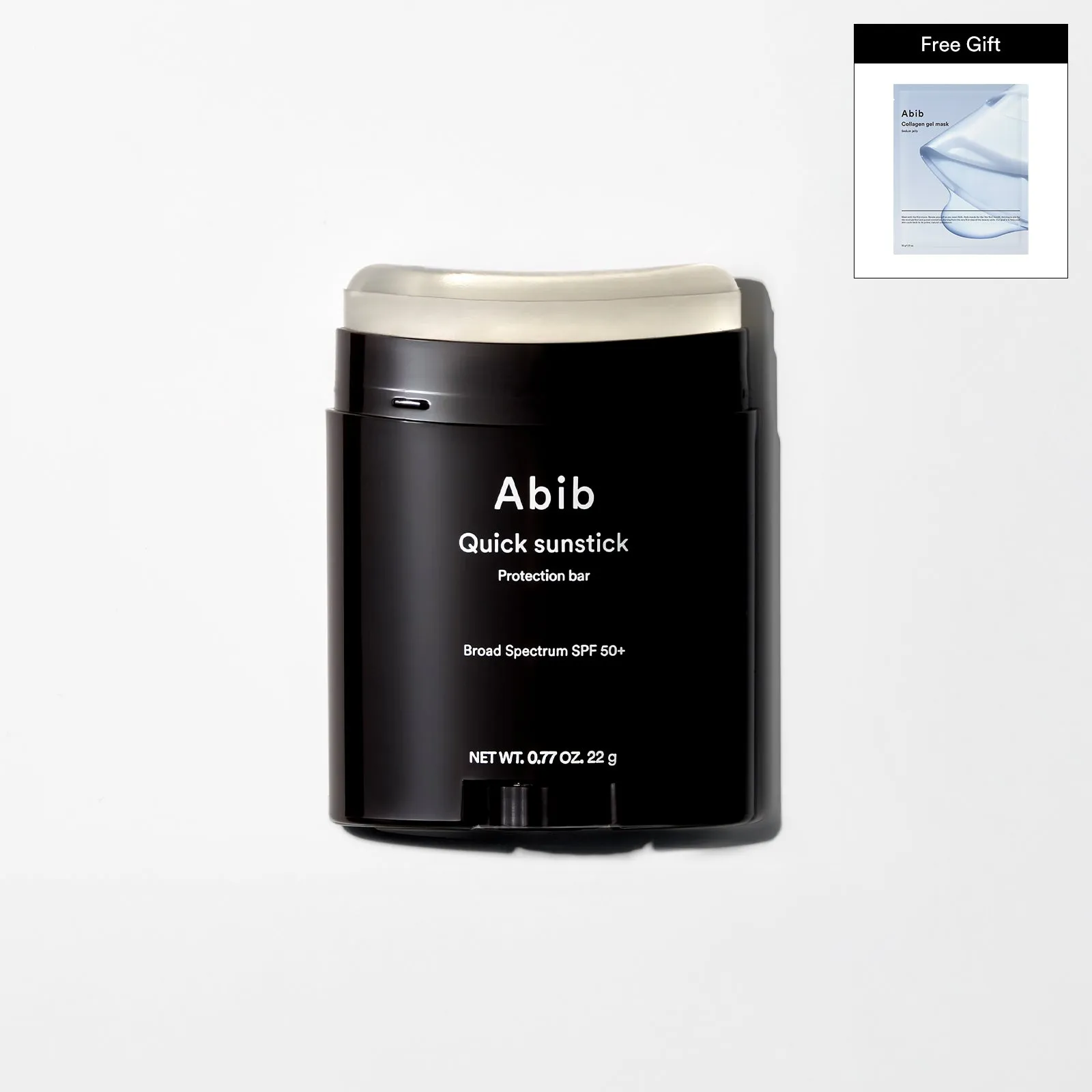
Quick sunstick Protection bar
A portable SPF 50+ stick built for quick, hands-free reapplication over makeup without a greasy or chalky finish.
What any reapplication-friendly sunscreen still needs
Swapping formats doesn't lower the bar for what counts as real sun protection. The American Academy of Dermatology sets three baseline requirements for any sunscreen: SPF 30 or higher, broad-spectrum coverage against UVA and UVB, and water resistance. Whatever format you choose, check its label against these points.
Reapplication itself has its own baseline, independent of format. The AAD recommends reapplying every 2 hours, after toweling off, when sweating, and after time in water, because a sunscreen's formula breaks down or clumps and loses effectiveness the longer it sits in the sun. That 2-hour interval applies even if your skin still feels dry.
Formats that hold up better midday
Wong's own workaround is a cushion applicator: thinner than a regular beauty sponge, so it doesn't soak up as much product, easy to carry in a bag, and small enough to fold into the tight areas around your nose and eyes. She's more skeptical of powder sunscreen for touch-ups. Getting enough powder onto your face reliably, in a continuous even layer, every time, is a hard standard for a powder to meet as a top-up method, in her account.
A stick sits between those two in what it's built to do. The AAD notes sticks are easy to use on targeted areas like under the eyes and the backs of the hands, and that a well-applied stick delivers enough sunscreen when you pass it back and forth across the area a few times. What a stick or cushion approach shares, and what a liquid pumped into your palm doesn't, is that you apply it directly and locally, over just the area you're touching up. A cushion still means carrying a separate pad and loading it each time; a stick applies straight from the tube, so it's the simpler option if you don't want to pack an extra applicator.
How to reapply without disturbing your makeup
- Skip the liquid or cream you'd need to rub in by hand. Reach for a stick or a thin, portable applicator instead.
- Glide or pat the product on in a targeted motion, working it only over the areas that need a top-up.
- For a stick, pass it back and forth over each area a few times to apply enough product, the same way you would for any stick sunscreen.
- Reapply every 2 hours, sooner after toweling off, sweating, or time in water. If you're using a water-resistant sunscreen, shorten that to every 40 minutes, or every 80 minutes for a very water-resistant product, once you've sweated or been in water.
FAQS
Reapplying sunscreen over makeup: common questions
How often should I reapply sunscreen if I'm wearing makeup?
Every 2 hours during the day, and sooner after toweling off, sweating, or time in water. A water-resistant sunscreen still needs reapplying every 40 to 80 minutes once you've been sweating or in water, even though it's rated water resistant.
Does powder sunscreen work as a midday touch-up?
It's a harder format to trust for real coverage. Getting enough powder onto your face evenly and consistently, every time you touch up, is difficult, and an uneven layer means uneven protection.
Why does a stick or cushion applicator disturb makeup less than a liquid?
You apply it directly to the skin in a targeted motion, which keeps you from spreading a pool of product across your whole face by hand, the motion that tends to smear foundation or move concealer.
Does a sunscreen stick still need to meet SPF and broad-spectrum requirements?
Yes. Format doesn't change the baseline, so check the label of any sunscreen you reapply, stick included, against the AAD guidance above.