
Under-Eye Patches for Pigmented Dark Circles: Brightening Actives, Hydrogel Delivery, and Crepey Skin Care
Learn how hydrogel patches and targeted actives like niacinamide, glutathione, and gentle retinal improve pigmented dark circles and crepey under-eye texture without irritation.
Key takeaways
- Cause determines cosmetic response: Dark circles stem from distinct anatomical origins: melanin-driven hyperpigmentation, vascular pooling from sluggish microcirculation, or shadow casting from structural orbital volume loss. Topical brightening actives only address excess surface pigmentation.
- Hydrogel occlusion creates a targeted contact environment: Hydrogel patch matrices conform closely to the periorbital contour, retaining moisture and holding active ingredients directly against the skin surface during a dedicated 10–15-minute application window.
- Formulation synergy balances tone and texture: Combining tyrosinase-inhibiting brightening agents like kojic acid and niacinamide with gentle turnover agents like retinal helps refine both uneven tone and crepey fine lines.
- Barrier preservation prevents flaking: The skin beneath the eyes is significantly thinner than surrounding facial tissue. Incorporating barrier-reinforcing lipids like ceramides and soothing agents like allantoin helps maintain comfort and prevent moisture loss when introducing active patch routines.
Understanding under-eye dark circles: pigmentation, vascular pooling, and structural hollows
When dark circles persist despite adequate rest and a consistent sleep schedule, the underlying cause is rarely simple fatigue. Periorbital darkening is multifactorial, arising from distinct biological and structural mechanisms, as outlined in a clinical review published in PMC. Selecting an effective topical routine begins with identifying which physiological factors are present.
| Melanin Pigment | Vascular Pooling | Structural Hollows |
|---|---|---|
| • Brown/uneven tone • Genetic or UV-led • Responsive to tyrosinase blocks | • Blue/purple undertone • Fluid buildup/edema • Responsive to caffeine vasoconstriction | • Shadow from volume loss / tear troughs • Unresponsive to topical brightening |
Melanin hyperpigmentation
True pigmentary dark circles present as brown, slate-grey, or uneven patches directly in the epidermal and dermal layers. According to AARP, excess melanin production in the periorbital area often has a genetic basis and appears more frequently in darker skin tones. As noted by the Cleveland Clinic, ultraviolet sun exposure triggers melanin synthesis, deepening existing periocular discoloration. Melanin-driven darkness is the primary category that responds to topical brightening agents, such as niacinamide, kojic acid, and glutathione, which work by interrupting pigment synthesis and dispersion.
Vascular pooling and microcirculation
Vascular dark circles often carry a bluish, violaceous, or purple cast. Because the periorbital skin is remarkably thin, the underlying vascular network, capillary beds, and deoxygenated blood can show through the surface. Sluggish microcirculation and local fluid accumulation can exacerbate this shadow effect. Clinical research in PMC indicates that caffeine-infused formulations can provide temporary cosmetic improvements for this concern by promoting local vasoconstriction and reducing periocular edema.
Structural hollows and tear-trough shadows
Anatomical shadowing occurs when orbital bone structure, midface volume deficiency, or natural age-related fat redistribution creates an indentation along the tear trough. Research in PMC emphasizes that periorbital hollows cast physical shadows that accentuate under-eye darkness. Topical skincare patches and cosmetic creams cannot replace lost structural volume or alter underlying bone morphology; their role is strictly focused on surface texture, skin hydration, and epidermal tone refinement.
Hydrogel delivery mechanics compared to traditional creams
The vehicle used to deliver cosmetic actives significantly influences how ingredients interact with the skin. Hydrogel patches and rich cream emulsions offer distinct physical properties tailored to different periorbital needs.
| Delivery format | Physical mechanism | Primary functional benefits | Practical considerations |
|---|---|---|---|
| Hydrogel Patch Matrix | Water-rich polymer mesh that conforms closely to facial contours | Delivers intensive surface hydration, provides immediate cooling, and holds actives in place for 10–15 minutes | Single-use format designed for targeted wear sessions |
| Traditional Rich Eye Cream | Lipid-dense emulsion containing oils and emollients | Delivers continuous barrier replenishment, restores surface lipids, and reduces ongoing moisture loss | Applied as a leave-on layer; open exposure subject to gradual evaporation |
Hydrogel materials are cross-linked polymer matrices capable of holding significant amounts of water. As documented in a biomaterials review in PMC, hydrogel structures conform flexibly to irregular tissue contours while maintaining a moist surface environment. Editorial coverage in Allure notes that hydrogel patches maintain ingredient contact with the under-eye area longer during wear compared to products lacking an occlusive matrix. Furthermore, according to research published by TRI Princeton, hydrogel patches are formulated to release active ingredients into the periorbital zone during a short, concentrated wear window.
In contrast, traditional eye creams are formulated as lipid emulsions. As highlighted in a comparative review in PMC, eye creams tend to be thicker and contain higher oil ratios than standard facial moisturizers to replenish the sparse sebaceous environment of the eye contour. Clinical studies cited in PMC demonstrate that hyaluronic acid creams consistently improve periorbital hydration and visible elasticity over prolonged use.
However, open cream applications remain subject to ambient evaporation over time. Hydrogel patches provide a physical barrier during application that limits rapid surface drying, creating a short-term contact environment for water-soluble brightening and soothing agents.
Active ingredients for discoloration, skin turnover, and texture
Addressing complex under-eye concerns requires targeted ingredients that manage melanin production, support structural firmness, and respect delicate periorbital tissue.
| Pigment Control | Texture & Volume | Microcirculation |
|---|---|---|
| • Kojic Acid • Niacinamide • Glutathione • Vitamin C | • Retinal • PDRN • Collagen • Ceramides | • Caffeine • Hydrating Gels |
Targeted brightening agents
For true hyperpigmentation, formulas combine actives that act on various stages of the pigmentation pathway:
- Kojic Acid: As reported in PMC, kojic acid acts by inhibiting the tyrosinase enzyme through copper chelation, helping diminish uneven dark spots. AARP notes that kojic acid is an effective pigment-lightening option that remains comparatively gentle on skin.
- Niacinamide: A multi-functional active shown in PMC and PMC to decrease periocular hyperpigmentation by suppressing melanosome transfer from melanocytes to keratinocytes.
- Glutathione and Vitamin C Derivatives: Antioxidants that assist in evening skin tone and defending against oxidative triggers that exacerbate dullness. Brightening hydrogel patch formulations combine glutathione, kojic acid, niacinamide, and stabilized vitamin C derivatives to address surface discoloration and uneven skin tone.
Retinoids, PDRN, and collagen support
As skin matures, collagen depletion makes periorbital skin more translucent and prone to crepey fine lines, allowing underlying shadows to become more prominent.
- Retinoids (Retinal / Retinaldehyde): Dermatological analysis in PMC establishes that topical retinoids support collagen organization, epidermal smoothness, and healthy cellular turnover. Retinal offers direct conversion pathways to retinoic acid while remaining manageable for delicate areas.
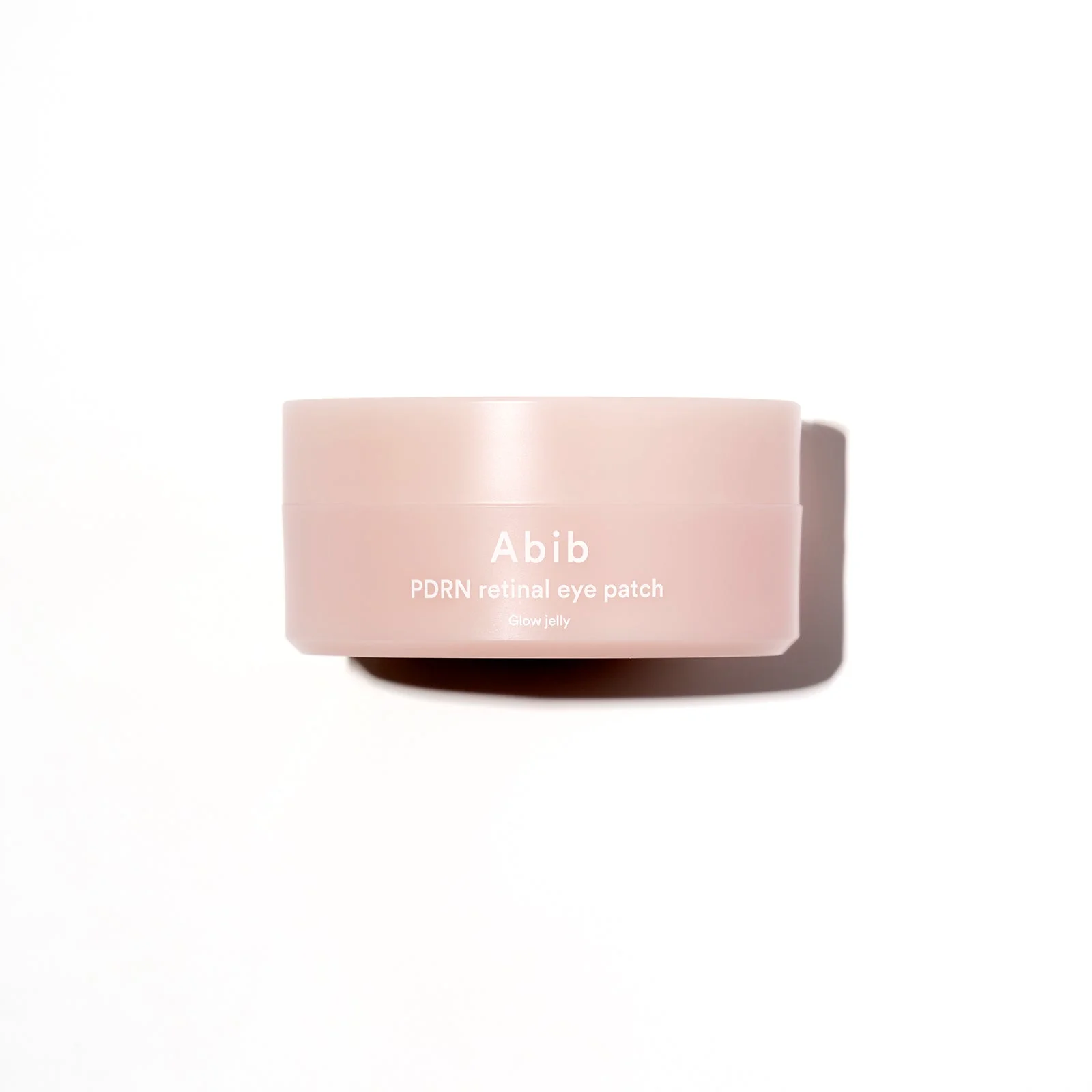
- PDRN and Collagen: Used in restorative formulations like the PDRN retinal eye patch Glow jelly alongside ceramides and caffeine to hydrate, nourish, and visibly firm the skin surface.
Microcirculation agents
- Caffeine: Widely used in morning routines, topical caffeine penetrates the periocular surface to temporarily constrict blood vessels and alleviate fluid accumulation, as documented in PMC.
While each ingredient has established cosmetic roles, scientific literature in PMC observes that evidence evaluating specific multi-active combinations in finished eye products remains limited across the industry. Rather than assuming unproven synergies, routines should select formulas based on verifiable ingredient functions matched to specific skin conditions.
Barrier protection and managing crepey skin without flaking
Periorbital skin is structurally delicate and particularly vulnerable to moisture depletion. According to Women's Health, under-eye skin is noticeably thinner than facial skin on the cheeks or forehead, making it sensitive to aggressive treatments. Applying standard facial exfoliants or high-strength retinol products directly to the eye contour often results in barrier disruption, redness, and peeling.
| Strategy | Periorbital Barrier Support & Tolerance Plan |
|---|---|
| Barrier Reinforcement | • Formulations containing Ceramide NP and physiological lipids • Niacinamide to stimulate lipid synthesis |
| Soothing Agents | • Allantoin to calm localized surface stress • Fragrance-free hydrogel bases |
| Frequency & Pacing | • Alternate with rich barrier creams • Wear strictly for the recommended 10–15 minutes |
A comprehensive review in The Journal of Clinical and Aesthetic Dermatology explains that reinforcing the periorbital stratum corneum reduces transepidermal water loss (TEWL) and improves skin resilience, with niacinamide specifically recognized for supporting ceramide synthesis. Similarly, clinical findings in PMC confirm that ceramide-containing eye creams effectively increase eyelid water content without provoking adverse ocular reactions.
Retinoids remain an effective option for smoothing crepey lines, but PMC notes that localized erythema, peeling, and dryness can occur if tolerance is exceeded. Reviewers evaluating active hydrogel patches at Ulta Beauty have occasionally noted localized irritation when active formulas interact with compromised barriers.
To maintain barrier integrity while smoothing crepey texture:
- Choose buffered formulas: Look for active patches formulated with soothing humectants and barrier lipids. As highlighted by Allure, formulations integrating allantoin and ceramides help temper brightening agents.
- Control wear duration: Adhere to the recommended 10–15-minute wear window. Leaving hydrogel patches on until they completely dry out can draw surface hydration away from the stratum corneum.
- Pace application frequency: When introducing patches containing retinal or potent brightening actives, begin with two to three applications per week, gradually increasing frequency as the skin demonstrates comfortable tolerance.
FAQS
Frequently asked questions
Why do my dark circles persist even when I get adequate sleep?
Dark circles are not solely caused by fatigue. If your discoloration appears brown or uneven, it is likely caused by excess melanin hyperpigmentation, which can be genetic or triggered by sun exposure, as noted by the Cleveland Clinic and AARP. Alternatively, darkness can result from anatomical shadows cast by natural tear-trough hollows. Adequate rest supports overall skin vitality, but it cannot alter melanin synthesis or underlying facial bone structure.
Can under-eye patches fade dark circles present since adolescence?
When under-eye darkness has been present since youth, it is frequently driven by genetic hyperpigmentation or familial orbital bone anatomy. Brightening patches featuring niacinamide and kojic acid can help fade excess surface melanin and even skin tone over time, as supported by clinical data in PMC. However, topical patches cannot fill structural hollows or change genetically determined vascular visibility.
How can I treat both dark circles and crepey lines without causing skin flaking?
Managing both concerns without compromising the delicate under-eye barrier requires balanced actives. Rather than applying harsh, unbuffered facial retinols, use hydrogel patches formulated with gentle turnover agents like retinal paired with soothing ingredients such as ceramides and allantoin. Evidence in The Journal of Clinical and Aesthetic Dermatology indicates that barrier-supporting agents help curb transepidermal water loss while actives refine texture.
Should hydrogel eye patches be applied in the morning or at night?
Application timing depends on the primary active ingredient and cosmetic objective. Patches containing caffeine are ideally suited for morning use to reduce puffiness and address fluid accumulation through temporary vasoconstriction, as detailed in PMC. For a morning depuffing step, use the PDRN retinal eye patch Glow jelly as directed on Abib's official product page.
Can I use regular facial serums around the eyes instead of dedicated eye products?
While some gentle hydrating serums can be applied broadly, facial treatments frequently contain higher concentrations of exfoliating acids, retinoids, or fragrances that can irritate the periorbital zone. The skin under the eyes is thinner and more prone to barrier stress, as highlighted in Women's Health. Dedicated hydrogel patches and periorbital creams are formulated to deliver targeted actives within vehicle matrices designed specifically for eye-contour tolerance.
Explore Targeted Eye Care Solutions
Discover gentle, high-performance formulations designed to brighten periorbital tone and support delicate skin barriers.