
Mess-Free Sunscreen Reapplication With Sunsticks
Sunsticks help refresh SPF without hand mess. Use light repeated passes, blot first, and dab over makeup for cleaner touch-ups.
Key takeaways
- Mess-free reapplication works best when you blot first, use light repeated passes, and dab edges with a clean sponge over makeup.
- One or two swipes of a sunstick may not deposit enough product for the labeled SPF coverage.
- A solid sunstick is a practical fit for daytime touch-ups, especially when hand-applied lotion feels inconvenient.
Mess-free sunscreen reapplication is a technique: choose a portable stick, apply repeated light layers, and avoid dragging makeup. The goal is convenient coverage you can repeat outdoors, during commutes, or after oil builds up.
Why is sunscreen reapplication so hard to keep up with?
Only 10% of sunscreen users reapply every two hours, so convenience is a practical barrier, not just a skincare preference.
The standard advice is simple: reapply sunscreen regularly, especially when you are outdoors. The real problem is behavior. Reapplication interrupts the day, can feel sticky on the hands, and often seems risky over makeup or skincare.
That gap shows up in usage data. As of 2024, only 10% of sunscreen users follow the recommendation to reapply every two hours (Market.us, 2026). Consistent sunscreen use also varies by age: 50.8% of adults aged 18 to 24 reported consistent use, compared with 28.1% of adults over 55 (Open Dermatology Journal, 2024).
For many people, the missing piece is not awareness. It is a format that fits the moment. A sunstick can stay in a bag, desk drawer, gym pouch, or travel kit, making the next application easier to start.
Why do sunsticks make reapplication easier?
Sunsticks reduce hand-to-face mess.
A stick format changes the friction points that make people skip reapplication. It is a convenient option when you are commuting, sitting near a window, leaving lunch, or touching up before an outdoor walk.
Modern sunsticks are also designed with finish in mind. Many formulas use powders to reduce shine and produce a matte finish on the skin. That type of texture can be especially useful when the face already has sunscreen, moisturizer, or makeup underneath.
A stick is not automatically better than lotion for every situation. Lotions can be easier for the first full-face application at home because you can measure and spread them more evenly. Sticks are especially useful for touch-ups because they are clean to carry and quick to apply in targeted areas.
How do you apply a sunstick for better SPF coverage?
A sunstick needs multiple light passes because one or two swipes often leave less product than the labeled SPF assumes.
Dermatology guidance cautions that sunscreen sticks are often under-applied. Labeled SPF testing assumes a product density of 2mg/cm², and research notes that users rarely reach that amount with only one or two stick passes.
Use a deliberate technique instead of one quick swipe.
- Blot visible oil or sweat with a clean tissue before applying.
- Swipe the stick in short, overlapping strokes rather than long, heavy drags.
- Repeat several passes over each exposed area to build more even coverage.
- Use light pressure around makeup, facial hair, or textured areas.
- Check missed zones such as the sides of the nose, temples, ears, and jawline.
- Wipe the top of the stick with a clean tissue after use, especially after applying over makeup.
The best application is consistent and repeatable. If a heavy swipe moves your base makeup or feels waxy, reduce pressure and add more passes. If you are outdoors for long periods, bring the stick with you instead of treating it as a one-time morning product.
How do you reapply sunscreen over makeup without smudging it?
Blot first, swipe lightly, then dab edges with a clean sponge to help refresh sunscreen while keeping base makeup more intact.
Makeup reapplication is where sunsticks are most useful. The goal is to place sunscreen on top without dragging foundation, concealer, or powder into streaks.
Use short strokes with very light pressure. Apply in small sections: one cheek, the forehead, the nose, then the other cheek. If the edges of the swiped area look visible, try lightly dabbing with a makeup sponge to help blend the edges without wiping the layer away.
Makeup layering is a distinct sunstick use case, which reflects how people actually reapply during the day.
For makeup days, avoid these habits:
- Pressing hard to get more product in one swipe
- Rubbing the stick back and forth over fresh concealer
- Applying over sweat without blotting first
- Skipping repeat passes because the first layer looks invisible
- Leaving makeup residue on the stick surface after use
Which sunstick formula fits quick touch-ups?
A portable stick fits quick facial touch-ups when it feels comfortable enough to reapply during the day.
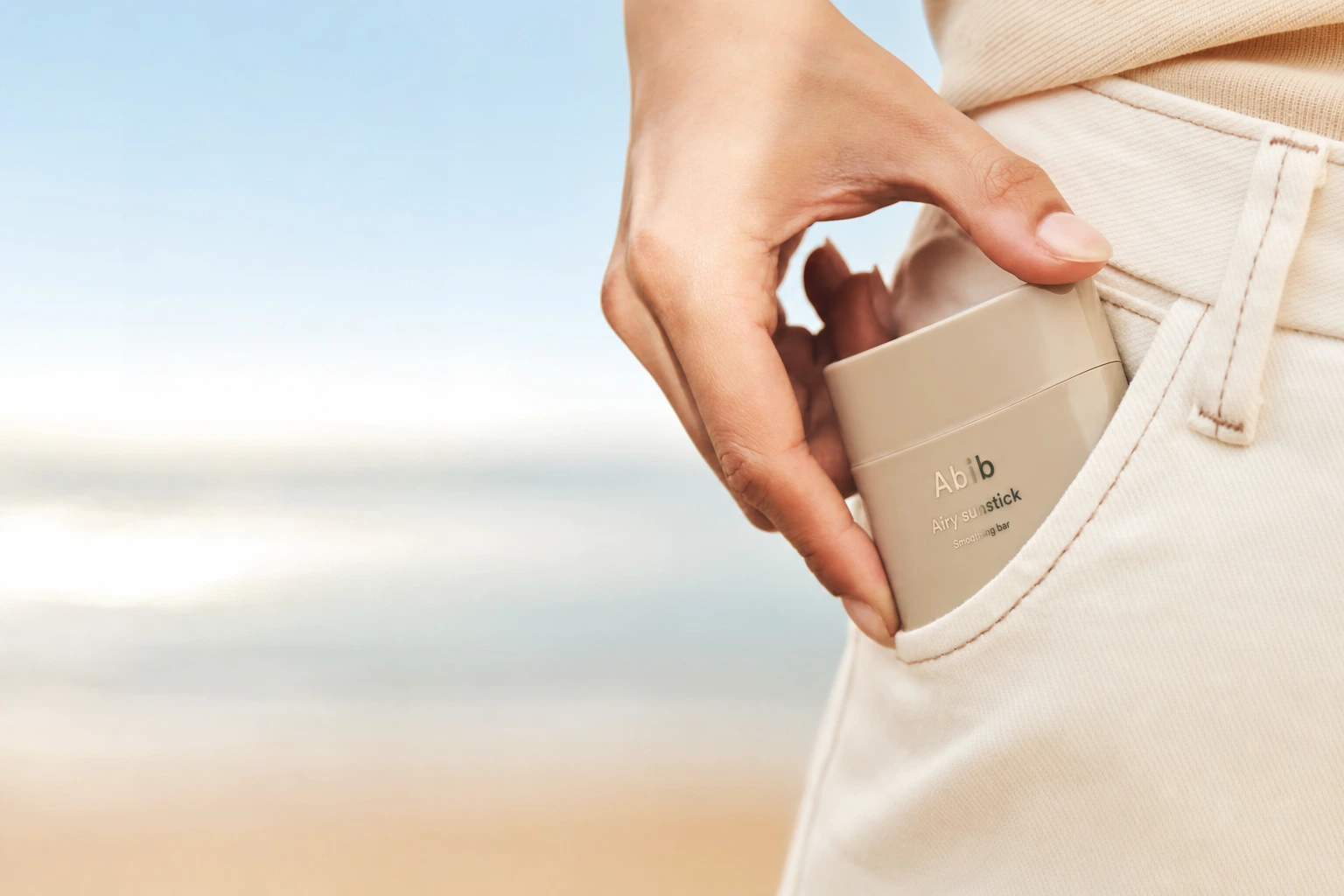
For Abib, the relevant official-store option is Abib Airy sunstick Smoothing bar, a stick made to maintain a comfortable skin feel. Its stick format supports quick reapplication without dispensing lotion into the hands.

Airy sunstick Smoothing bar
A portable sunstick for quick daytime touch-ups without hand-applied lotion.
The official product imagery highlights its formulation for comfort. For readers who want a stick that fits into a daily bag, the most practical advantage is the format: swipe, repeat, and return it to your pouch without the mess of open liquid sunscreen.
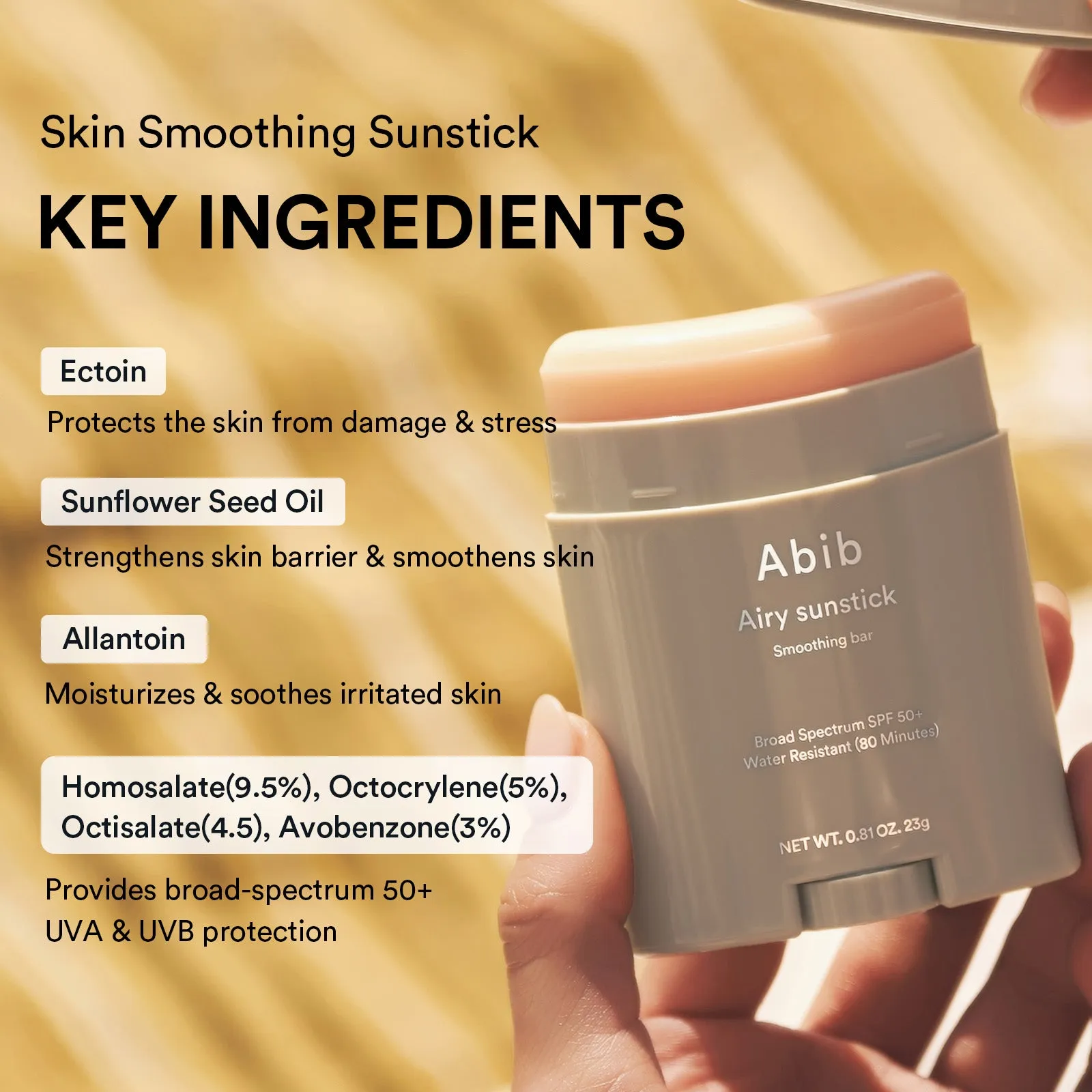
A good sunstick routine still depends on technique. Use Airy sunstick in repeated light passes, especially on high-exposure areas like the cheeks, nose, and forehead. If you are applying over makeup, blot first and use a sponge only to soften visible edges.
FAQS